The Hormonal Rollercoaster: Progesterone
Menstrual digestive changes start before your period even arrives. During the luteal phase — the days following ovulation — your body significantly ramps up production of a hormone called progesterone.
Progesterone is a smooth muscle relaxant — and since your GI tract is lined with smooth muscle, high levels of it put your gut into slow mode. That's why so many people experience constipation, bloating, and gas in the 5 to 7 days before their period. It's not random. Your digestive system is literally being chemically slowed down.
The Culprit Behind "Period Poops": Prostaglandins
As your period starts, progesterone drops sharply and your body floods the area with lipid compounds called prostaglandins. These are the chemical messengers that signal the uterus to contract and shed its lining — they're also what drives menstrual cramps.
Prostaglandins don't stay neatly localized to the uterus, though. The uterus and large intestine sit right next to each other in the pelvic cavity, so the overflow inevitably hits the smooth muscle of your colon too. Instead of relaxing like progesterone made it do, the colon goes into overdrive — contracting rapidly and drastically reducing the time it has to absorb water from your waste. The result? Sudden, urgent, frequent loose stools or full-blown diarrhea (Bristol Scale Types 5 and 6).
The Overlap with IBS and Gut Sensitivity
If you're already managing a chronic GI condition like Irritable Bowel Syndrome (IBS), the menstrual cycle can act as a powerful amplifier. Research shows that women with IBS report significantly worse diarrhea and abdominal pain during the first two days of menstruation compared to healthy controls. That's a critical detail — because what looks like a dietary flare-up might actually be hormonally driven. Without cycle tracking, you'd never know the difference.
Connecting the Dots: Dual Tracking
Your reproductive and digestive systems are more intertwined than most people realize. Tracking your bowel movements without also tracking your menstrual cycle leaves a massive blind spot in your health data. A sudden bout of diarrhea is easy to blame on something you ate — when in reality it might line up perfectly with day one of your period.
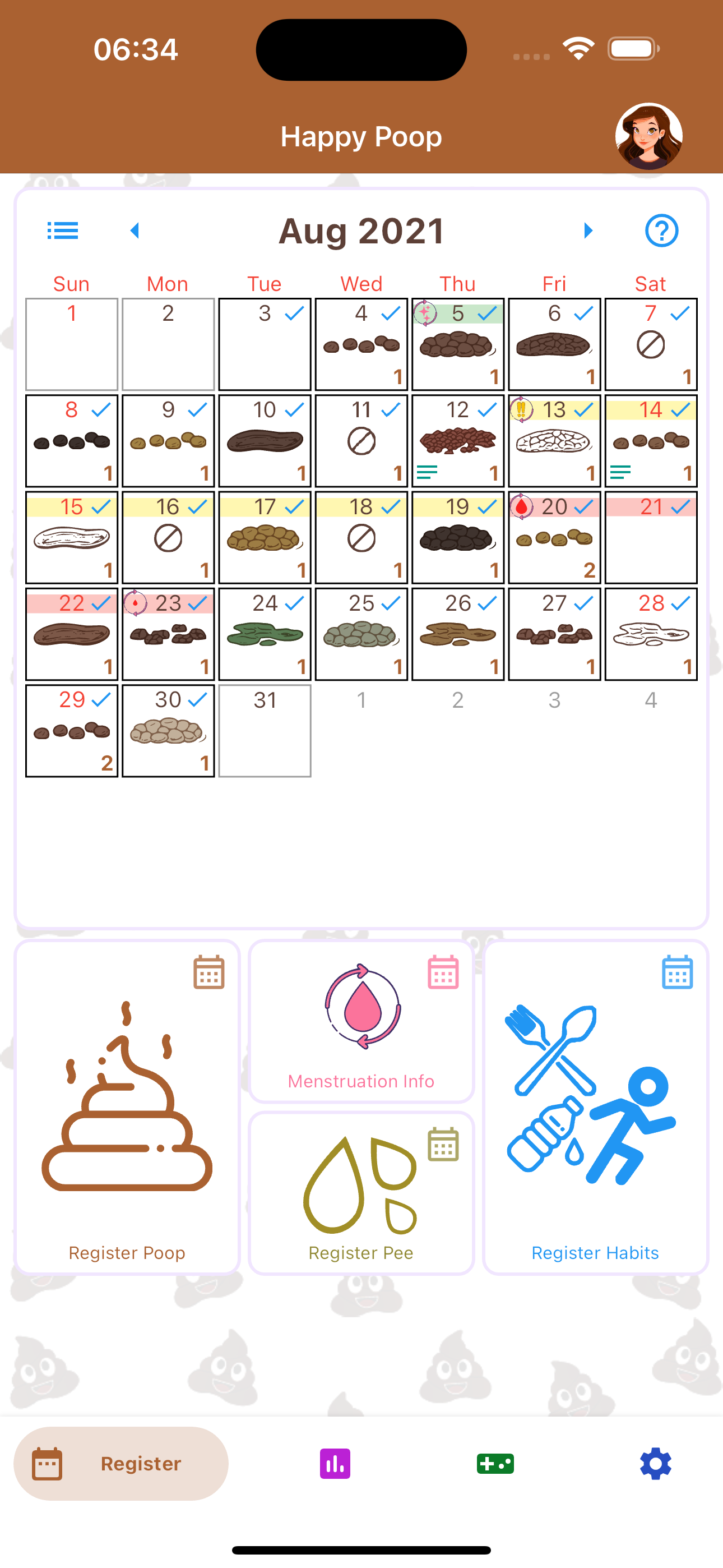
That's why we built a dedicated Menstruation Tracker directly into Happy Poop. You don't need to jump between a period app and a digestion app anymore to figure out what's happening in your body.
Visualize Your Unique Pattern
By logging your flow intensity alongside your Bristol Scale ratings, the app's unified calendar view surfaces your personal biological rhythms. You can anticipate those pre-period days of constipation — and proactively bump up your hydration and fiber — or brace for the prostaglandin rush before it catches you off guard.
Track Your Cycle & Digestion TogetherThe Follicular Phase: The Digestive Reset
Most people only pay attention to their digestion during the difficult parts — the luteal phase and menstruation. But the follicular phase — roughly days 1 to 14 of a standard 28-day cycle, from the first day of your period through ovulation — is equally important for building a complete picture of your gut's monthly rhythm.
During the follicular phase, estrogen is rising while progesterone stays low. For many people, this is actually the most comfortable and predictable time for their digestive system. Without progesterone suppressing gut motility, transit time normalizes. You'll likely notice your most consistently formed, comfortable stools — Bristol Scale Types 3 and 4 — during this window. Energy improves, appetite regulation stabilizes, and the bloating and constipation from the luteal phase gradually fade.
From a tracking standpoint, the follicular phase is your critical baseline reset. Log your gut function during this window and you've got a reference point — what your digestive system looks like in its most hormonally neutral state. That baseline is what gives the changes in the luteal phase and menstruation their diagnostic meaning. Without it, every deviation just looks like noise.
Estrogen's Direct Role in Gut Motility
Progesterone gets most of the press when it comes to digestion, but estrogen has its own significant and direct relationship with the GI tract. Estrogen receptors are found throughout the gut wall — in the colon and the enteric nervous system — which means hormonal fluctuations directly shape how gut muscle contracts and moves food along.
Research suggests estrogen generally supports gut motility, partly by counteracting progesterone's braking effects — which is one reason the follicular phase tends to feel easier on your digestion. But estrogen's role isn't uniformly positive. At very high levels, like those seen in estrogen-dominant conditions such as endometriosis or polycystic ovarian syndrome, it can drive increased gut sensitivity and inflammation, making IBS-like symptoms significantly worse.
Estrogen also has a complex relationship with your gut microbiome. A collection of gut bacteria called the estrobolome produces enzymes that metabolize estrogen and recirculate it back into the bloodstream. An imbalanced microbiome can disrupt that metabolism — creating a feedback loop where poor gut health worsens hormonal balance, and vice versa. It's one of the more compelling biological reasons to treat gut health and reproductive health as a single interconnected system.
Dietary Strategies for Each Cycle Phase
Once you understand the hormonal drivers behind your symptoms, you can stop just reacting and start planning ahead. Here's what the clinical evidence suggests for each phase of your cycle:
Luteal Phase (Post-Ovulation to Period Onset): Managing Constipation and Bloating
This is the window when progesterone peaks and gut motility slows. Proactive strategies include:
- Increase soluble fiber: Foods like oats, flaxseed, apples, and legumes help draw water into the stool, counteracting progesterone's water-absorbing effect on the colon and keeping stools soft.
- Magnesium supplementation: Magnesium acts as a mild osmotic laxative by drawing water into the intestine. A dose of 200–400 mg of magnesium glycinate or magnesium citrate in the days before your period is commonly recommended by gynecologists to relieve constipation and reduce cramping. Always consult your doctor before starting any supplement.
- Reduce sodium and refined carbohydrates: Both contribute to water retention and bloating, which compounds the progesterone-driven abdominal discomfort.
- Stay well-hydrated: Higher water intake directly offsets the colon's increased water absorption during this phase.
Menstruation (Days 1–5): Managing Diarrhea and Cramping
When prostaglandins spike, the goal shifts from preventing constipation to slowing down an overactive gut.
- Opt for gentle, easily digestible foods: Bananas, white rice, plain toast, and cooked vegetables are less likely to further accelerate an already-stimulated colon.
- Anti-inflammatory foods: Omega-3-rich foods (salmon, walnuts, chia seeds) and ginger have documented anti-inflammatory properties that may help moderate prostaglandin activity. Some research supports the use of ginger specifically for reducing menstrual pain and associated GI distress.
- Probiotics: A healthy, diverse gut microbiome can moderate inflammatory responses. Regular probiotic intake—either from fermented foods (yogurt, kefir, kimchi) or supplements containing Lactobacillus strains—supports a gut environment that is more resilient to the inflammatory surge of menstruation.
- Limit caffeine and alcohol: Both are gut stimulants that can worsen diarrhea during this phase.
Follicular Phase: Nourishing the Microbiome
Use this calmer digestive window to invest in your gut health. Load up on prebiotic-rich foods — garlic, onions, asparagus, bananas — to feed your beneficial bacteria. If you're planning any new dietary experiments or trying to pinpoint food sensitivities, this is the best phase to do it. Changes made during the luteal phase or menstruation are too easily confounded by hormonal effects to be reliable.
When Digestive Symptoms Warrant Medical Attention
Cycle-related digestive changes are normal — genuinely, widely shared, and biological. But there's a real difference between expected hormonal fluctuation and symptoms that deserve medical attention. Talk to a doctor or gynecologist if you're experiencing any of these:
- Severe diarrhea that significantly impacts your daily life during every menstrual cycle, particularly if it is accompanied by significant abdominal pain beyond typical cramp intensity.
- Symptoms that do not resolve after the first 1 to 2 days of your period and continue throughout the cycle without a clear hormonal correlation.
- Blood in the stool at any point during the cycle.
- Unexplained weight loss alongside digestive changes.
- Deep, cyclical pelvic pain during bowel movements, which is a hallmark symptom of endometriosis—a condition where endometrial tissue grows outside the uterus, sometimes on the bowel itself, causing severe cycle-linked GI symptoms.
- Symptoms that appear to be worsening cycle-over-cycle rather than remaining stable or improving with dietary management.
Conditions like endometriosis, inflammatory bowel disease, and celiac disease are routinely underdiagnosed because their symptoms overlap so heavily with "normal" menstrual discomfort. A detailed tracking log that captures the precise timing, severity, and nature of your symptoms across multiple cycles is one of the most powerful diagnostic tools you can bring to a specialist appointment.
Using Your Tracking Data at a Gynecologist Appointment
Gynecologists and gastroenterologists are increasingly aware of the deep connection between reproductive and digestive health — and more of them are actively encouraging patients to come in with structured symptom data. A cycle-synchronized gut tracking log can transform a vague, frustrating appointment into a genuinely productive diagnostic session.
Before your appointment, use your Happy Poop tracking history to put together a concise summary covering at least two to three recent cycles. Document:
- The specific days of each cycle when digestive symptoms changed (onset of constipation relative to ovulation, onset of diarrhea relative to period start).
- The Bristol Scale ratings associated with your worst and best days.
- Any accompanying symptoms: bloating severity, abdominal pain location and intensity, urgency.
- Dietary changes you have tried and their effect on symptoms.
That kind of structured, data-driven picture lets your doctor skip past vague description and move straight into targeted investigation. It can be the difference between being told "this is just normal for some women" and walking out with a referral for endometriosis evaluation, IBS-D management, or a celiac antibody panel — conditions that are dramatically underdiagnosed in menstruating individuals precisely because their symptoms get written off as normal cycle variation.
Sources & Medical References:
- National Institutes of Health (NIH) / PubMed - Gastrointestinal symptoms before and during menses in healthy women.
- American College of Obstetricians and Gynecologists (ACOG) - Dysmenorrhea and the role of prostaglandins in gastrointestinal distress.
- NIH / PubMed - The Estrobolome: The Gut Microbiome's Influence on Estrogen Metabolism.