How Hydration Directly Impacts Your Digestion
Water is the unsung hero of the human digestive system. While high-fiber diets frequently capture the clinical spotlight for promoting bowel regularity, the biological reality is that fiber is entirely dependent on adequate hydration to function.
The Mechanics of Colonic Absorption
Let's start with what the large intestine (the colon) actually does, because it matters here. As food travels through your stomach and the 22 feet of the small intestine, your body extracts nutrients, leaving behind a liquid slurry of indigestible waste. When that liquid reaches the colon, the reclamation process kicks in — the colon's job is to pull water and essential electrolytes back into the bloodstream, gradually solidifying the waste into a formed stool.
Your body is wired to prioritize survival over digestive comfort. If you're systemically dehydrated — from not drinking enough, heavy sweating, or consuming diuretics like alcohol and excessive caffeine — your body will aggressively pull extra water from the waste in your colon to maintain vital organ function and blood volume.
Beyond Soluble and Insoluble: The Modern View of Fiber
Historically, health professionals split fiber into two camps: "soluble" or "insoluble." Modern gastroenterology has largely moved on from that framework — solubility in a test tube doesn't accurately predict how a fiber actually behaves inside the digestive tract. Instead, clinical nutrition now focuses on two far more meaningful properties: Viscosity and Fermentability. Both depend entirely on adequate hydration to work.
Viscosity: The Gel-Forming Matrix
Viscous fibers — like those found in oats and psyllium — have a high water-holding capacity. When they hit fluid in the digestive tract, they swell into a dense, gel-like substance. That gel does two important things: it slows gastric emptying (keeping you full and helping stabilize blood sugar), and it provides soft, lubricating bulk to your stool. Without enough water, viscous fibers can't form that gel — and you risk dense, dry impactions in the bowel instead.
Fermentability: Feeding the Microbiome vs. Adding Bulk
Fermentability is about whether the bacteria in your colon can actually digest the fiber. Highly fermentable fibers (like inulin or the FODMAPs found in onions) are almost completely consumed by gut bacteria. This process produces beneficial Short-Chain Fatty Acids (SCFAs) and gas, but because the fiber is "eaten," it does not add bulk to your stool.
Poorly fermentable fibers (like wheat bran or cellulose), on the other hand, resist bacterial breakdown and travel through the colon intact — acting like structural scaffolding. To keep that scaffolding soft rather than hard and abrasive, it needs to trap and hold water. If you're dehydrated, these fibers don't soften. The result: hard, painful stools (Bristol Scale Types 1 and 2).
Reading the Signs: Stool as a Hydration Metric
Your daily digestive output is one of the most telling, real-time indicators of your hydration status. By comparing your stool to the Bristol Stool Scale, you can spot water deficits right away:
- Types 1 and 2: Hard, separate lumps, or lumpy, sausage-like formations are classic indicators of clinical dehydration and slow transit time. The colon has absorbed too much water, leaving the waste dry and difficult to pass.
- Types 3 and 4: Smooth, soft, and cohesive stools indicate an optimal balance of hydration and dietary fiber.
Finding Your Balance Through Tracking
The "eight glasses a day" rule sounds simple, but it doesn't account for the fact that hydration needs vary enormously based on body mass, climate, and daily physical activity. Everyone's baseline is different. If you notice a sudden shift toward constipation in your tracking data, inadequate water intake is statistically the most likely explanation. Actively monitoring your fluid intake alongside your digestive output lets you figure out exactly how much water your body needs to stay regular and comfortable.
You can use the tool below to calculate the estimate daily goal for water intake.
Turn Data into Wellness
Curious about how your other daily habits affect your gut? Read our comprehensive guide on Why You Should Track Your Bowel Habits.
Stop guessing if you drank enough water today. Easily log your hydration, track your Bristol Stool types, and monitor your digestive health in seconds with Happy Poop.
Daily Hydration Calculator
Find your baseline water needs based on body weight:
The Real-Time Hydration Metric: Your Urine
Stool consistency tells you a lot about your hydration — but it's a lagging indicator, reflecting what happened 24 to 48 hours ago. For real-time feedback, look to your kidneys. They're constantly filtering your blood and adjusting urine concentration based on your body's current water levels. When you're well hydrated, urine runs pale yellow or nearly clear — a sign your body has plenty of fluid to flush out metabolic waste. When intake drops, the kidneys conserve aggressively, producing dark, concentrated, amber-colored urine. Critically, when your kidneys hit that conservation mode, your colon is doing the same thing — pulling maximum water from digestive waste and setting the stage for hard, uncomfortable stools.
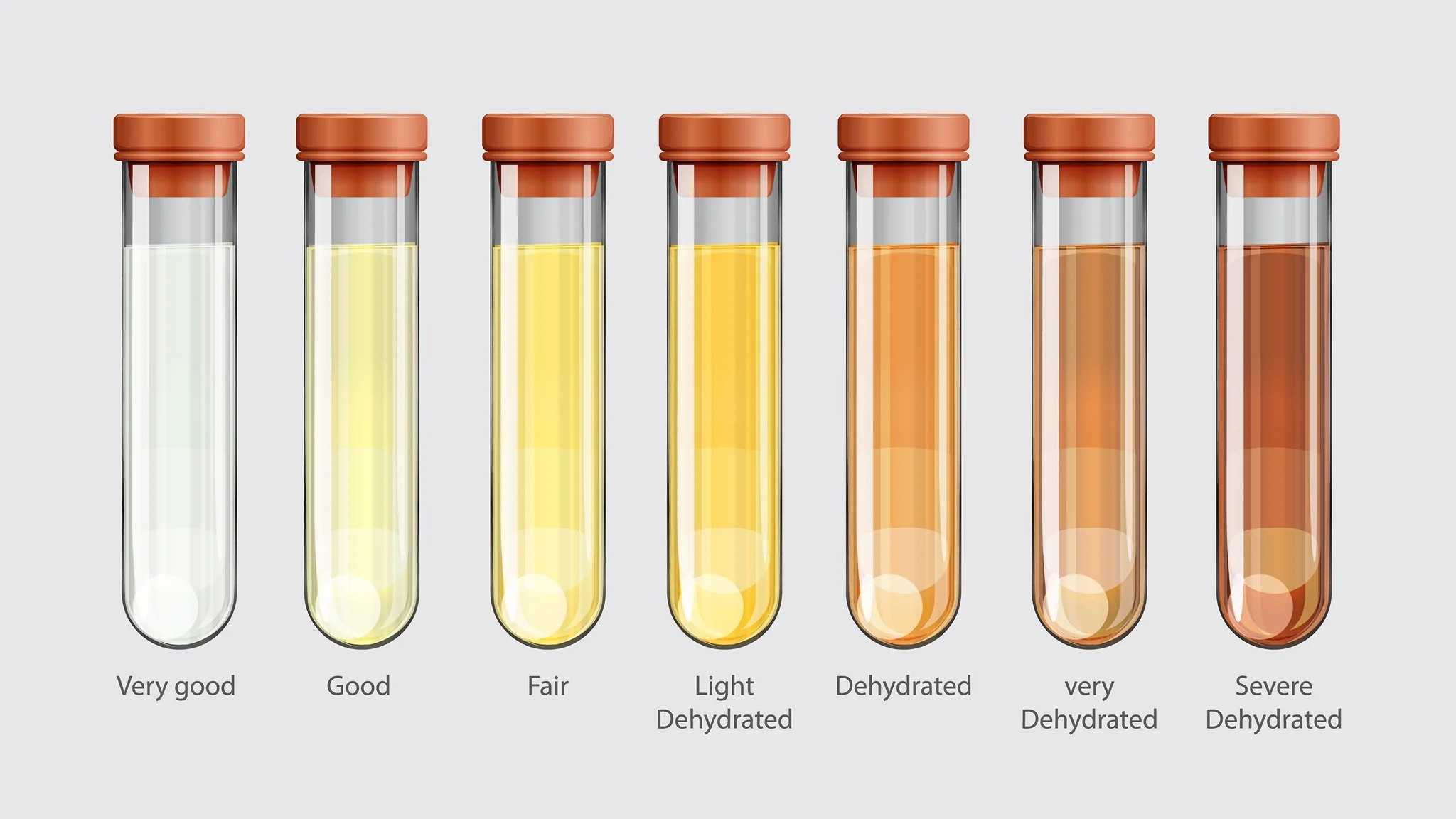
Your hydration needs shift day to day based on physical exertion, ambient temperature, and diet — so maintaining a healthy baseline means watching both your bowel and bladder habits. Stool alone only gives you half the picture. That's why Happy Poop doesn't stop at bowel movements. It includes a dedicated urine tracking module that lets you log color, frequency, and volume in seconds. When you track urine alongside dietary and stool data, you can catch dehydration before it has a chance to slow your colonic transit down.
Sources & Medical References: